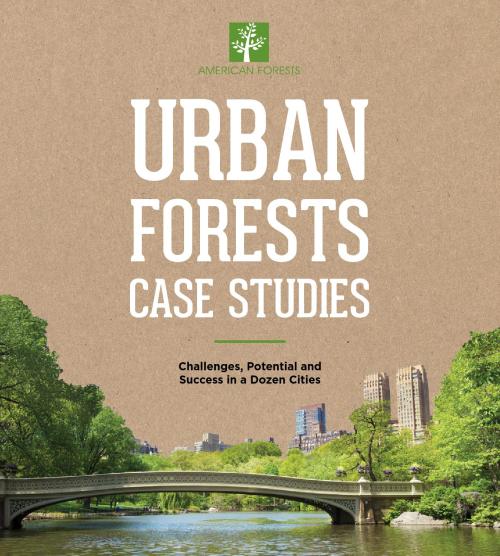
This publication represents extensive research, interviews and examinations into 12 cities that have begun — or are continuing — to make an investment in their urban forests in order to reap future gains.
Showing posts with label tree planting. Show all posts
1.14.2014
Urban Forest Case Studies: Challenges, Potential and Success in a Dozen Cities
Philadelphia featured in the USDA’s publication, Urban Forest Case Studies: Challenges, Potential and Success in a Dozen Cities
12.03.2013
Reference Guide for Structural Soil
![]() |
| Photo courtesy of: bdglandscape.wordpress.com |
There has been a perceived need to create growing room for trees in our urban environment along streets and in parking lots. The soil under sidewalks, adjacent to sidewalks, and in sidewalk cutouts is usually compacted to prevent the walk from settling. This prevents many tree roots from growing in soil under the walk. Growth can be severely restricted, creating unhealthy trees, especially in sidewalk cutouts, but if soil is not compacted, the walk will settle.2
A solution that creates root space without compromising soil strength for sidewalk support is "structural soil" or an "engineered soil" mix beneath the sidewalk as shown below (See: structural soil detail). This strategy appears to be especially beneficial for clayey and loamy soil where compaction beneath walks can become quite severe. One disadvantage of the engineered soil shown below is that settlement could be beyond acceptable standards in the U.S.2
The need for this soil has been assisted by federal and local stormwater regulations requiring reductions and sometimes elimination of run-off from spreading pollutants, destroying streams, and in our older cities, overburdening sewer systems.
There are options out there when shopping for your structural soil and now that an overabundance of muncipality urban design guidelines are requiring its use, the inventors of each are all vying for your support. We break each down below and hopefully help steer you in one direction or the other, depending on your project needs.
SilvaCell
- DESCRIPTION: Simply put, they are milkcrate-esque plastic boxes that are buried underground and filled with dirt.1 They were developed by a well spoken, well read, and very convincing landscape architect, Jim Urban. We believe that he believes what he says, and so do a lot of other folks. This passion, and the fact that these things just look like they make sense, accounts for their success. Click here to buy some.
- PROS: Like we said, these things seem to work, at least that what Jim Urban tells us.
- CONS: Money. They are expensive and quite honestly are the first thing to get the axe when we start the value engineering process. Please, we are not whining about value engineering, just build it into your design on the front end like everyone else and roll with it from there.
- WHERE IT HAS BEEN USED: Lincoln Center, New York City; the Olympic Village in Vancouver; Martin Luther King, Jr. National Memorial, Washington, D.C.
![]() |
| Installation of SilvaCells. Image courtesy DeepRoot Green Infrastructure, LLC |
CU-Structural Soil
- DESCRIPTION: CU-Structural Soil is a mix of dirt and rocks designed to bear the load of pavement and whatever rolls across it, while leaving enough open space underground for tree roots, air and water. It’s since been licensed and sold to builders and landscapers across the U.S. and Canada. A mixture of 20-percent soil and 80-percent rocks (by weight) gets packed around a layer of soil surrounding the tree’s roots. The stones are all the same size and the ratio ensures that each stone touches another. When concrete or other loads press down on the soil, the stones create a rigid skeleton that bears the load while the soil itself stays loose.1 It was invented by Cornell University professor Nina Bassuk, and now holds the license for the product.1 You can find producers here.
- PROS: Its cheap, and chances are any engineering or landscape architecture firm already has a passable specification laying around. Our advice: read your spec. If you haven't had a qualified soil scientist/structural engineer write you a fresh one in a while, it may be time.
- CONS: It can be tough to compact if it isn't dry. We ran into this problem on a big project and it was a struggle. In this instance, our spec was tight, but any time problems pop up during construction, it almost doesn't matter whose fault it is, it can hurt the client. Make sure you remind and double-remind the contractor that this is a tricky part of this soil and they need to pay attention.
- WHERE IT HAS BEEN USED: Johns Hopkins Hospital, Sheikh Zayed Cardiovascular and Critical Care Tower and The Charlotte R. Bloomberg Children's Center, World Trade Center, New York City; San Francisco Zoo Hippo Exhibit, San Francisco, CA; Ritz Carlton, Washington, D.C.1
![]() |
| Courtesy Nina Bassuk |
Sand-Based Structural Soil
- DESCRIPTION: The name is pretty much self explanatory. Instead of mixed-in aggregate, this is a sand based solution. A top layer of crushed rock allows air, water and minerals to get through to surface roots. The rest is filled in with sand that presses together under pressure, but leaves microspaces and remains loose enough for roots, water and air to move through. Compost gets mixed in to help hold on to water and nutrients. Landscape architect Robert Pine helped develop it, but it remains an open-source strategy and is not for sale as a product.1
- PROS: It is most likely better for trees because it doesn't compact as well. Having said that, we don't know for sure that is true. The folks who will want to sell you the two products above will tell you that it won't compact. We currently have a big project under construction that is using one of these sand-based structural soils, we will keep you posted on what we find.
- CONS: You never know what you are going to get. Again, this is not a product, it is as open-sourced as you get, and there is not one specification that is going to guide you
- WHERE IT HAS BEEN USED: Alcohol, Tobacco and Firearms Building, Washington, D.C.; Federal Reserve Bank, Boston, Mass.; coming soon to the Brooklyn Bridge and Brooklyn Botanical Garden, New York City.1
![]() |
| Photo: The great soil debate – ASLA |
More Reading:
www.asla.org/uploadedFiles/CMS/Resources/22407_MoylesChris.pdf
www.asla.org/uploadedFiles/CMS/Meetings_and_Events/2010_Annual_Meeting_Handouts/Sat-B1The%20Great%20Soil%20Debate_Structural%20Soils%20Under%20Pavement.pdf
vdcgreen.blogspot.com
Works Cited
1 http://m.theatlanticcities.com/technology/2011/09/turf-war-soil-compaction/100/
2 http://hort.ufl.edu/woody/engineered-soil.shtml
2.25.2011
Micro Intervention: TreeVitalize
![]() |
| Photo Courtesy of PHS |
TreeVitalize is a program launched by the Pennsylvania Department of Conservation and Natural Resources in 2005 to increase tree canopy in urbanized areas. The Pennsylvania Horticultural Society (PHS) is the lead partner for TreeVitalize in southeastern Pennsylvania. PHS is a private non-profit organization that motivates people to improve the quality of life and create a sense of community through horticulture. Tree Tenders is a PHS training program offering free classes on tree biology, identification, planting, and proper care. Philadelphia Parks & Recreation staff oversees street tree planting and care within Philadelphia.
(a)biotic has found PHS to be a wonderful source for all things herbaceous and/or woody. The link below is a wonderful resource for the amature and professional alike:
http://www.pennsylvaniahorticulturalsociety.org/phlgreen/current-trees.html
They are gearing up for the 2011 tree planting and are seeking volunteers and applications. If approved a group can expect to be provided with:
- Between 10 and 100 trees to plant in your neighborhood, based on your group’s request, capacity, and level of experience. The number, species, and type of nursery stock (balled & burlap, container, or bare root) of trees approved will be determined by PHS and Philadelphia Parks & Recreation. Bare-root trees will be used wherever possible.
- Cutting and removal of pavement, as needed and as funding allows. However, please note that if the property owner cancels the tree request after submitting the request form and the sidewalk has already been cut, the owner will be held responsible for the cost of replacing the pavement. (Property owners are also responsible for removing any stumps.)
- Tree stakes and ties.
- Priority enrollment for free PHS Tree Tenders training as well as other specialized trainings
For an application or information contact:
Mindy Maslin Casey Combs Liz Haegele
215-988-8844 215-988-8874 215-988-1618
Applications are due March 25, 2011
Subscribe to:
Posts (Atom)


